
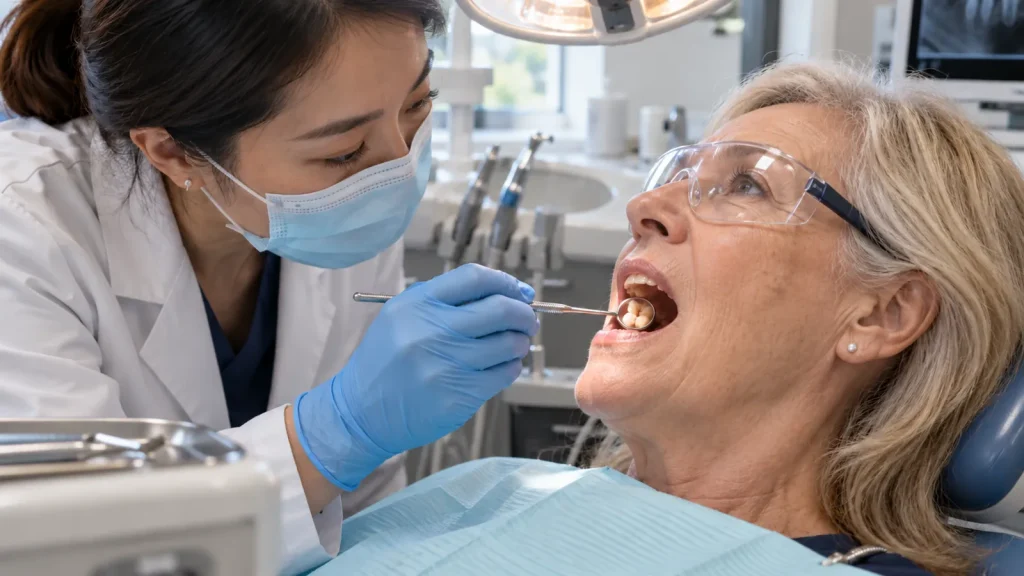
A tooth that hurts under pressure may have decay, a damaged restoration, a crack or another problem that needs assessment. You cannot reliably tell which cause applies from the pain alone. If the discomfort keeps returning when you chew, contact a dentist even if the tooth feels normal between meals.
It is a common kind of uncertainty: nothing obvious looks broken, but one bite sends a sharp pain through the area. You do not need to keep testing it or wait for constant pain before asking for help.
If you are searching for a dentist on Merivale or nearby, Dr. Valerie Archibald’s family dentistry practice is on Clyde Avenue in Nepean. Explain the pressure-related pain when booking so the team understands the purpose of the visit.
Why pain can appear only under pressure
Biting places a load on the tooth and the tissues supporting it. That can reveal a concern that is less noticeable when your mouth is at rest.
The pattern may vary. You might feel discomfort when biting into something firm, when releasing the bite or when a cold drink reaches the same area. Those details are worth describing, but they do not provide a diagnosis on their own.
Avoid deliberately chewing hard food to see whether the pain is still there. You can tell the dentist about what happened during ordinary eating without recreating the symptom.
It is also fine if you cannot confidently identify the tooth. Describe the side and area as closely as you can. An assessment can help locate the source.
Possible causes your dentist may consider
Several different findings can lead to similar symptoms. The American Association of Endodontists describes possible causes of biting pain, including decay, a loose filling or a crack.
A dentist may also need to consider what has changed recently. Tell them about a new filling or crown, an injury, or a bite that feels different. A history of clenching or grinding is useful information too, but it should not be assumed to explain the problem without examination.
A tooth does not have to show a large visible fracture to need attention. Equally, having pain does not establish that the tooth needs the most extensive treatment you have read about online.
The purpose of the visit is to move from possibilities to findings. Ask the dentist to explain what supports the diagnosis and whether anything remains uncertain.
What to tell the dental team
Try to give a simple account of the discomfort:
- When did it start?
- Is it on one side or in a specific tooth?
- Does it happen on biting, release, with temperature or at rest?
- Has there been recent treatment or an accident?
- Are there other symptoms, such as swelling or fever?
Mention if the problem is affecting your ability to eat or sleep. If you have been avoiding one side, tell the dentist rather than assuming that makes the symptom less relevant.
If the situation changes while you are waiting for the appointment, call again. The team’s advice should be based on current symptoms, not only on what you reported several days earlier.
A short note on your phone can help you remember the sequence. There is no need to use technical language.
How the tooth and bite may be assessed
The dentist may examine the tooth, neighbouring teeth, gums and existing restorations, and check how the teeth contact each other. Tests or imaging may be recommended where they help answer a specific question.
Not every cause is visible in a mirror, and no single image identifies every possible crack or source of pain. If more assessment is needed, ask what the next step is intended to clarify.
The treatment recommendation should follow the findings. Replacing or adjusting a restoration, addressing decay or arranging further care are possibilities in different circumstances. A root canal is not the automatic answer to every painful bite.
Before proceeding, make sure you understand which problem is being treated, the alternatives that apply and what follow-up is expected. You can ask for the explanation again if the terminology is unfamiliar.
When to seek urgent help
Arrange prompt advice if pain is getting worse, if swelling or fever appears, or if the discomfort follows an injury. The practice’s emergency dentistry information explains the relevant service, but call directly to describe the concern.
Difficulty breathing or swallowing, a serious facial injury or uncontrolled bleeding requires emergency medical attention. Do not wait for a routine dental booking in those circumstances.
Until you receive advice, avoid hard chewing on the area and do not probe or attempt to repair the tooth. A pharmacist or healthcare professional can advise on pain relief that is appropriate for your health and medicines.
Temporary relief can make the wait more comfortable, but it does not show that the underlying problem has resolved.
Questions to Ask at Your Appointment
Once the dentist has assessed the area, useful questions include:
- What did the examination show?
- Is the source of the pain clear, or is more testing needed?
- Which options are reasonable for this tooth?
- What should I do if the pain changes before treatment?
- How will we check the response to care?
- Is a referral recommended, and what would it involve?
If you are worried about cost or the number of visits, mention that during the planning conversation. Ask which details are confirmed and which depend on further findings.
Frequently Asked Questions
Why does the pain come and go?
A problem may be triggered by certain forces or conditions rather than hurting continuously. Describe the pattern to the dentist. Intermittent pain is not enough to rule out a concern that needs care.
Can a tooth hurt when biting without a visible crack?
Yes. There are several possible causes, and some problems are not visible to you. An examination is needed to understand what is happening.
Should I mention a recent filling or crown?
Yes. Tell the dentist when the treatment occurred and when the pain started. This helps guide the assessment without assuming the recent procedure is necessarily responsible.
Does biting pain always mean I need a root canal?
No. The recommended treatment depends on the diagnosis. Ask what the dentist found and why a particular option is being considered.
Can I wait if the tooth stops hurting?
Call for advice rather than deciding the issue has gone away. Describe the earlier symptoms and any change so the team can recommend an appropriate next step.
Talk to Dr. Valerie Archibald
For recurring pain when biting, contact Dr. Valerie Archibald’s office at 224–1400 Clyde Avenue in Nepean, near the Merivale area. Explain what triggers the pain and whether it has changed. You can arrange an assessment without knowing the diagnosis in advance.